
What does climate change look like in your area? Learning from Manor Castle, Sheffield

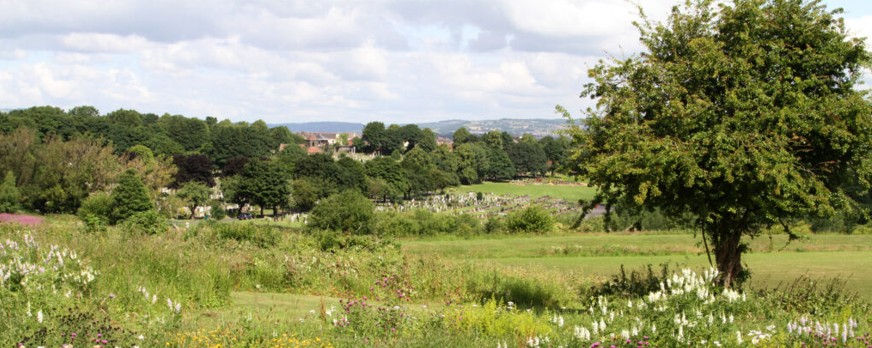
Earlier this year I worked with the Green Estate to explore a simple but powerful question - what does climate change look like for Manor Castle ward in Sheffield?
The Green Estate is working towards becoming a national urban resilience demonstrator and, having seen my work on the local impacts of climate change and database of connections between social and environmental issues, the team commissioned me to help them develop a clearer, data-informed picture of climate risks, vulnerabilities and opportunities in the Manor Castle ward. We were all curious about what data exists at local level, what does not, and how useful it really is in practice (spoiler: lots more than expected and much is very useful indeed).
This blog shares what we did, what we learnt, and what might be useful for others.
“This approach to bringing together climate resilience, population vulnerability and opportunity for action data at a neighbourhood level is innovative and impactful. We are already using it to influence our own work. Blended with contextual information and living experience stories, this is a real powerful tool for change. We hope that policy-makers, decision makers and neighbourhood level actors use it as a driver for collaboration.”
Roz Davies, CEO, The Green Estate
Starting with what is already out there
This was a rapid, desk-based review on a modest budget. It wasn’t a massive academic exercise. We were looking for actionable learning from existing data. I brought together existing datasets and research on climate risks, environmental conditions and social factors. I looked at how these intersect at ward level, and how this compared to the city as a whole, the region and the wider UK. The focus was not only on environmental risk. It was on how those risks connect to everyday life - such as health, income, housing, jobs, age, disability, access to green space. I looked for the opportunities - where action on climate and environmental issues could improve lives at the same time. All of this used existing data. The difference was bringing it together at local level and translating it into clear, accessible learning.
The value, and limits, of local data
We worked with what is available. That in itself was a key finding. Some data is accessible and highly valuable. Some is difficult to find, requires specialist tools, or sits behind paywalls. Some simply does not exist at ward level. Geographical boundaries of datasets do not always align well, which adds complexity. These challenges limit what communities and place-based organisations can do with data on their own.
At the same time, there is a lot already out there. Many curated sources, often reflecting a local authority level picture, are too broad to move beyond an introduction and don’t often have the detail that is useful locally. But when you are ready to go deeper, there are useful datasets that can support more detailed, place-based understanding.
One I particularly love is the Climate Just maps which bring together climate risk and social vulnerability. They are available at neighbourhood level and make it much easier to see how exposure and vulnerability overlap. They are genuinely useful for local conversations.
What the rapid review made possible
The review was never intended to be the final word. It provides a foundation for discussions and further work. We shared findings with local institutional stakeholders – policy makers, academics, civil society, and representatives of the local community on the board and advisory panel of the Yorkshire Policy Innovation Partnership (YPIP) who generously funded the work.
The discussion showed how quickly a shared, local evidence base can shift the conversation. People engaged immediately. The chat was active throughout. Participants reflected that this brought together data they had not previously seen side by side, across climate risk, social conditions and everyday impacts.
It opened up new lines of thinking, not just about environmental risk, but about how those risks connect to existing work on health, income, housing and future opportunities. It also prompted more critical reflection on how data can sometimes be used in our sector, including the importance of avoiding deficit-based narratives. Participants agreed that hopeful, opportunity-focused framing can engage communities more effectively than focusing only on problems. A strong theme in the discussion was that this hope needs to be grounded in reality. Having data to identify where opportunities may lie helps to support more honest conversations about how historic inequity and everyday challenges could be addressed through climate action.
Discussions prompted by the data included how the area might be able to benefit from ‘green jobs’, the possibilities offered by bioregional approaches, and practical resilience and action in communities on everything from housing retrofits to climate-linked disruption of global food systems.
From the discussion, the next steps are already taking shape: sharing the learning more widely across local stakeholders, taking the conversation into the community, testing and building on the findings with local knowledge and real-life experience.
What others might take from this
This kind of rapid, place-based analysis can be applied in other areas, using existing data to support more joined-up, practical action. There are a few practical lessons for other places considering similar work.
Start with what already exists. You do not need to begin from scratch. There is a lot of data available. The value comes from bringing it together in a way that makes sense locally. There’s a lot you can gather in 2-3 days.
Link social and environmental issues. Looking at climate risks alongside health, income and housing creates a much more complete and useful picture.
Use data to open conversations. A rapid data review can create a shared starting point. It should lead to further discussion, not replace it. Be clear about gaps. Not all data is accessible or available. Naming those gaps helps shape what next and well as provide context.
There is no shortage of high-level reports. The value lies in translating and applying that knowledge to a specific place. Yet many communications with place-based groups and communities still assumes a low level of knowledge and understanding. In practice, many people are ready for more detailed, data-informed conversations, and for collective deliberation on how to respond.
Organisations like the Green Estate, their networks, and their communities are leading the way.


Comments